Planning a specific Pal
Work backwards from your target Pal to find which parent combinations produce it — saving hours of trial and error at the breeding farm.
Finance, health, study, and everyday calculation tools.
This tool runs entirely in your browser. Your file is never uploaded and never leaves your device.
Select any two parent Pals to instantly see what child they produce. Discover breeding combinations for rare and legendary Pals, plan multi-generation breeding chains, and optimize passive skill inheritance — all without leaving the browser.
Live Pal Visuals
Search current Pals, pick the parents visually, and check breeding combinations with live-style icon artwork sourced from the same Palworld image set used by palworld.gg.
Parent pool
225
Children
140
Special combos
203
Stored outcomes
25,426
Result
Current child outcome
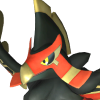
Special combo result
Click any Pal card to place it into Parent A.
Current parent pair output


Anubis + Vanwyrm
Average breeding power
615
Gender requirement
Any valid parent genders
How the current calculation is being resolved
Work backwards from your target Pal to find which parent combinations produce it — saving hours of trial and error at the breeding farm.
Find legendary and rare Pal recipes that require specific parent pairings which are not obvious from the in-game breeding menu.
Plan multi-generation breeding chains to combine rare passive skills from two different Pals into a single offspring with ideal traits.
Choose the first parent Pal from the dropdown list.
Choose the second parent Pal.
The calculator instantly shows the resulting child Pal.
Use the result as a parent in a new calculation to plan multi-step breeding chains.
Each Pal in Palworld has a hidden internal breeding power value. When two Pals breed, the game calculates the average of the two parents' power values, then finds the Pal whose power value is closest to that average — that is the child. This means the child is not always a combination of the parents' species, and the same child can result from many different parent pairings. For example, Anubis (breeding power 590) can be produced by crossing Penking and Bushi, or Caprity and Mossanda, or other combinations whose average is close to 590. The game has a few unique exceptions — certain Pals like Frostallion Noct can only be produced from one specific parent combination regardless of the power value math. This calculator handles both the general power-value system and the special-case overrides.
Getting a rare Pal from breeding is just the beginning — the real endgame is breeding one with the right passive skills. Each Pal can have up to 4 passive skills, and offspring inherit them randomly from their parents. The probability of inheriting a specific skill from one parent is roughly 50–55% per slot. To maximize skill inheritance, both parents should carry the desired skills. The most sought-after passive skills are Legend (+20% attack, defense, movement), Lucky (+15% attack, +15% work speed), Artisan (×1.5 work speed), and Swift (+30% movement). Since these skills are rare, the standard approach is: (1) catch wild Pals with one desired skill each, (2) breed them together to combine two skills in one offspring, (3) repeat until you have a Pal with all four target skills. Breeding for skills takes many generations — patience and a large Pal Box are essential.
Full scientific calculator with sin, cos, tan, log, ln, square roots, and exponents — works in degrees and radians.
Find X% of Y, calculate percentage increase or decrease, and convert marks to percentage.
Calculate semester GPA, cumulative CGPA, and convert CGPA to percentage on India's 10-point scale.
Calculate exact age in years, months, and days from any date of birth — useful for exam eligibility and government schemes.